Overview:
Chemical pumps are industrial pumps designed to meet the special requirements of chemical processes, such as transporting liquid materials, operating efficiently and reliably, withstanding high temperatures, and resisting cavitation. Based on their working principles and structural characteristics, chemical pumps can be classified into centrifugal pumps, positive displacement pumps, magnetic drive pumps, submersible pumps, and oil submersible pumps, among others. These pumps exhibit properties such as corrosion resistance, wear resistance, high-temperature tolerance, and pressure resistance to meet the transportation and circulation needs of various specialized processes in the chemical industry.
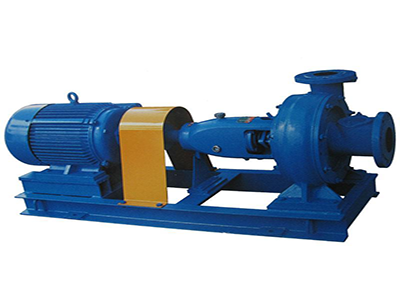
1.Centrifugal Pump:
A centrifugal pump is a mechanical device that uses rotational power to generate centrifugal force,
creating pressure in the liquid and enabling its transportation. It mainly consists of components such as
the pump casing, impeller, bearings, and seals.
2. Positive Displacement Pump:
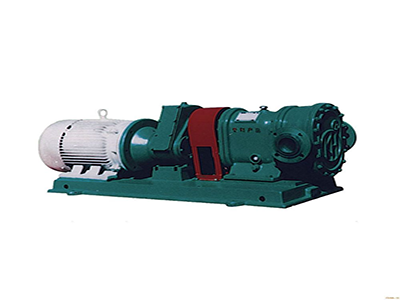
A positive displacement pump moves fluid through the system by mechanically trapping a fixed volume
of liquid. On the suction side, the volume expands, while on the discharge side, it contracts. As a result,
the volume per rotation is fixed and theoretically constant, regardless of outlet pressure, inlet vacuum,
or fluid properties. Positive displacement pumps are also self-priming, creating a strong vacuum at the
inlet. This simplifies system design and allows maintenance without the need for manual repriming.
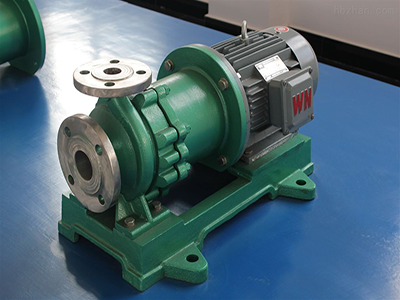
3. Magnetic Drive Pump:
A magnetic drive pump is a type of pump that uses magnetic coupling to transport liquids. It does not
require mechanical seals, eliminating leakage issues during operation. Therefore, it is widely used in
applications where fluid contamination must be avoided.
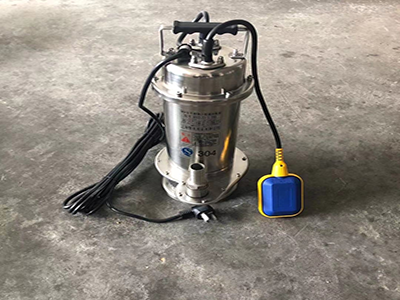
4. Submersible Pump:
A submersible pump is installed directly in the liquid and driven by an electric motor to extract liquid
from deep wells or reservoirs. It features a simple structure and ease of use, making it widely applicable
in industrial, agricultural, and municipal settings.
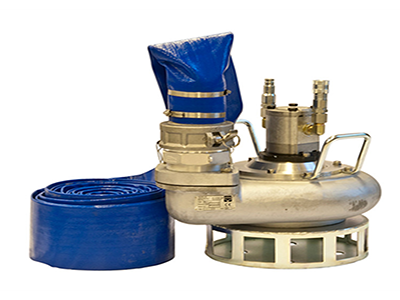
5. Oil Submersible Pump:
An oil submersible pump is a device used to lift liquid from the bottom of a well to the surface, primarily
for oilfield extraction and well production. It offers high efficiency and reliability, playing a critical role in
improving oilfield productivity and reducing production costs. Its advantages include deep oil extraction
capability, stable operation, and excellent heat dissipation. Oil submersible pumps are also essential in
settings such as gas stations and oil depots.
Working Principles:
The working principle of chemical pumps is based on the fundamentals of fluid mechanics, converting mechanical energy to transport fluid from low-pressure to high-pressure regions. Their structure typically includes major components such as the pump body, impeller, shaft, sealing device, and drive unit. The pump body serves as the outer shell, housing other components; the impeller is the core part, responsible for converting pressure energy into kinetic energy; the shaft supports the impeller and transmits power; the sealing device prevents leakage; and the drive unit (e.g., an electric motor) provides the power for normal operation.
Applications:
- Chemical Industry: Chemical pumps are used for raw material transportation, reactant addition, and product output in various processes.
- Petroleum Industry: In oil extraction, refining, and transportation, chemical pumps are employed to transport crude oil, refined oil, and various oil-gas mixtures.
- Pharmaceutical Industry: During drug manufacturing, chemical pumps are used to transport various medicinal solutions, solvents, and reaction materials.
- Environmental Protection: In wastewater and sewage treatment, chemical pumps handle liquids containing solid particles or corrosive substances.
- Food Processing: Chemical pumps are also widely used in the food industry, such as in dairy, beverages, and alcoholic products, for transporting raw materials and cleaning pipelines.