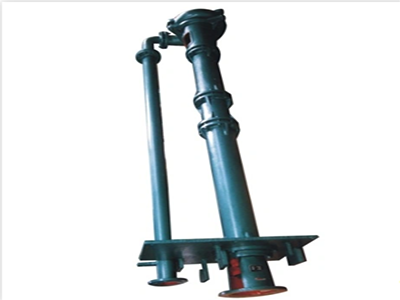
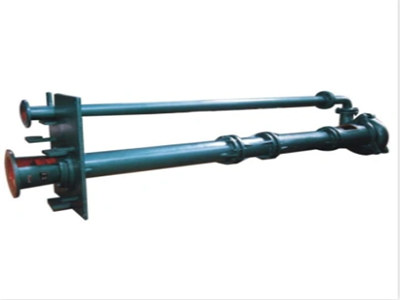
Sewage pumps are mechanical devices used to transport wastewater and effluents from municipal pipelines, industrial plants, residential areas, and other locations to wastewater treatment stations or
water treatment facilities.
Structure
Like other pumps, sewage pumps consist of two core components:
- Impeller
- Volute (or discharge casing)
The performance of these components determines the pump's overall efficiency, including:
- Clog resistance
- Efficiency levels
- Cavitation resistance
- Abrasion resistance
Impeller Types and Characteristics
1. Open Impeller:
- Pros: Easy to manufacture, clean, and maintain.
- Cons: Unsuitable for long-term operation; inefficient for large particles or long fibers; low efficiency.
2. Closed Impeller:
- Pros: Stable long-term operation; high efficiency.
- Cons: Poor clog resistance; prone to fiber entanglement; unsuitable for untreated wastewater with
large particles/fibers.
3. Vortex Impeller (Single/Dual Channel):
- Pros: Excellent clog resistance; reduced mechanical wear due to flow path design.
- Cons: Lower efficiency.
4. Channel Impeller:
- Pros: Superior clog resistance (handles large particles/fibers); high efficiency; stable operation; ideal
for pressurized inlet pumps.
- Cons: Poor cavitation resistance.
5. Screw Centrifugal Impeller:
- Pros: Non-destructive transport; high pass-through capacity (for large particles/fibers/high
concentration media); protects materials; stable operation.
Volute Designs
- Spiral Volute: Rarely used in sewage pumps.
- Annular Volute: Simple structure, easy to manufacture; common in small sewage pumps.
- Semi-Spiral Volute (Intermediate Type): Combines high efficiency (spiral) and high flow capacity
(annular); increasingly adopted by manufacturers.
Working Principle
1. Startup: The motor drives the impeller to rotate, drawing wastewater into the pump through the inlet.
2. Transport: Centrifugal force moves the fluid to the outlet.
3. Sealing: Sealing components prevent leaks between the pump body and motor.
4. Control System: Monitors flow rate, pressure, and liquid level, adjusting the pump’s speed or start/stop
automatically:
- High flow/liquid level: Increases speed for higher efficiency.
- Low flow/liquid level: Reduces speed to save energy.
Applications
Primarily used for transporting:
- Wastewater
- Effluents
- Slurries containing solid particles or fibrous materials.